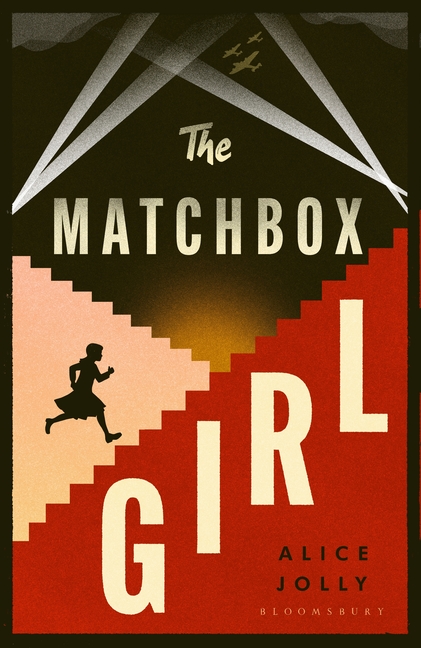
The Matchbox Girl
I am generally sceptical about books that use child narrators to add poignancy to dark plots, or novels that use nazism as a means of introducing moral jeopardy to their characters’ journeys. And yet by the end Jolly had won me over. This is a book that walks a tightrope between sentimentality and honesty, between realism and imagination, and creates something spirited and memorable as it does so ... While the narrative is pretty impressionistic at times, Jolly is clearly trying to keep to the historical reality of this hospital ... At times, Jolly becomes too invested in her own research, so the narration occasionally jumps around, leaving Adelheid’s point of view to cross centuries and continents in order to explore Asperger’s legacy and how his actions are seen by others. That makes the book a little baggy. But in the end, Jolly manages to mould all her fragments together into a distinctive narrative, which brings both the darkness of nazism and the courage of those who tried to resist it very close to the reader.
Read Full Review >>
'I apologise if this Story sounds like a Children’s Adventure. I have no other words.' Thus begins Adelheid Brunner, the teenage narrator of Alice Jolly’s playful yet deeply respectful The Matchbox Girl, who continues with an unnerving clarification: 'Please understand, I write for You now from my Posthumous Life' ... The story concerns her time as a patient, and sometime assistant, on the (real-life) Curative Education Ward of the Vienna Children’s Hospital, then under the auspices of Hans Asperger (of Asperger’s syndrome), in the run-up to and during the Second World War ... The slippery narrative perspective, openly playing with fact and fiction, does much to underscore the futility of retrospective judgement ('the benefit of hindsight') ... What, then, do we learn about Asperger and the goings-on at the increasingly Nazified hospital? The novel channels his tolerant approach to his patients ... Alice Jolly’s Asperger remains a likeable, vaguely comic background figure who, by the end, is as unknown to us as he was at the start. For all the appeal of Adelheid herself, and the credible reimagining of a complicated corner of history, this feels like a missed opportunity.
Read Full Review >>
In this compelling, deeply researched novel, Alice Jolly blends history and fiction, real people mingling with invented characters to create a jittery world where innocent high jinks coexist with terror ... Jolly has won awards, including the Ackerly prize for her memoir Dead Babies and Seaside Towns; she knows about pain. The Matchbox Girl is as tense as a thriller and profoundly moving.
Read Full Review >>